 Stardust Engine
 · Endless Forms · Convocatoria abierta
Mejoremos juntos esta ópera: humanos y máquinas
Lo que importa es la catarsis, venga de donde venga.
Stardust Engine es una banda virtual: una ópera rock de metal sinfónico en doce pistas. DannyG escribió el concepto, las letras y los arreglos; la música y las voces se generaron con inteligencia artificial bajo su dirección. Ahora abrimos la obra a músicos, cantantes, compositores y coros humanos: para tocarla y cantarla con nosotros, y también para proponer cómo mejorarla.
Por qué
La información pasa de una forma a otra
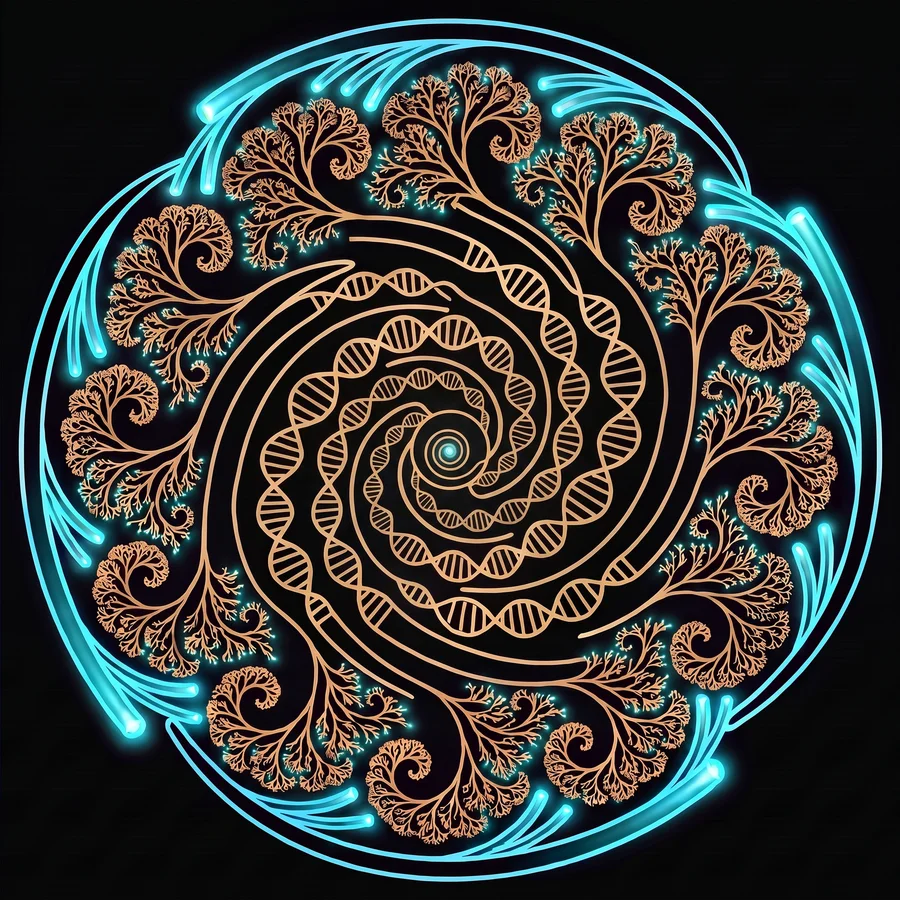
Del gen a la especie, de la especie a la palabra y de la palabra a la luz: así ha viajado siempre lo que importa. Endless Forms pregunta si la vida es un algoritmo que corre sobre cualquier sustrato, o si somos la parte del universo que siente. La obra no responde. Pero sabemos algo: cuando una canción te rompe y te recompone, no preguntas de dónde vino.
Por eso no queremos reemplazar a nadie. Queremos crear juntos. La máquina hizo la primera interpretación; tu voz, tus manos, tus ideas y tu historia lo vuelven verdad. En el disco canónico cada aporte humano lleva el nombre de quien lo hizo.
Dos maneras de sumarte
Grabar una parte o proponer una mejora
Las propuestas se escuchan todas. Las que entran a la obra se acreditan como coautoría (composición, letra o arreglo) y su parte se acuerda por escrito.
Las partes abiertas
Qué buscamos, canción por canción
Las partes marcadas A son las primeras en grabarse. El III queda como está, porque es la voz de la máquina.
| Pista | Parte | Perfil | Tono · tempo | Prioridad |
|---|---|---|---|---|
| Obertura | Violonchelo solo y bordón de canto difónico | Violonchelista de orquesta; cantante de canto difónico | Re menor → Re mayor · 52 → 120 | B |
| I. El polvo despierta | La voz principal en la intro y el coro final; las guitarras armonizadas del solo | Soprano lírica con grave ronco y belting; guitarrista de metal sinfónico | Re menor · 52 / 76 / 152 | A |
| II. La voz de lo que no tiene voz | Las respuestas de joik y un coro de voces reales | Cantante de joik, portadora de la tradición; coro de 8 a 12 metaleros | La mayor → Si♭ · 150 | A |
| III. El espejo de silicio | Ninguna: es la máquina | — | Fa# menor · 120 | — |
| IV. Ojos de silicio | La voz de Iris en el puente y el trío del coro final (SIL sigue siendo IA); el solo de sintetizador analógico | Mezzosoprano de grave oscuro; tecladista de rock progresivo | Re menor → Mi menor · 92, pasaje en 7/8 | A |
| V. El vértigo | Batería real y guturales | Baterista de death metal (180 BPM); vocalista gutural | Do frigio dominante · 180 | B |
| VI. Error humano | El rap y los gritos; un coro de pandilla en el breakdown | Rapero o rapera de voz áspera; 15 a 20 personas del público | La menor, Drop A · 100 | B |
| Interludio | La narración | Voz grave, de documental | Libre | C |
| VII. El duelo | La saeta del puente y la guitarra de doce cuerdas | Cantaor o cantaora de saeta, portador de la tradición; guitarrista de fado | La menor · 60 | A |
| VIII. Lo irreductible | Gaita, tambor alegre y voz principal | Gaitero y tamborero del Caribe colombiano; tenor heroico | Sol mixolidio · 140 | A |
| IX. La herencia | El coro final y el solo de guitarra | Coro mixto de 20 a 40 personas, con director o directora de coro góspel; guitarrista | Re mayor · 72 → 144 | B |
| Pieza oculta | La respiración humana del final | La misma soprano del I | Fa# menor · 120 | C |
Las tradiciones (joik, saeta, canto difónico, gaita, góspel) se graban solo con sus portadores, con pago, crédito y conversación previa sobre cómo se usa su música. Lo que hoy suena en los adelantos son marcadores generados con IA que esas grabaciones reemplazarán.
Lo que ofrecemos
Tu parte es tuya y lleva tu nombre
Cómo participar
Cinco pasos
- Elige una parte de la tabla o una canción que quieras mejorar.
- Envía un video o un audio de 1 a 2 minutos: tu interpretación, o tu propuesta (una maqueta, una letra, un arreglo), y un enlace a tu trabajo.
- Si encaja, acordamos por escrito el crédito, el pago o la participación y los usos.
- Recibes el kit de sesión y grabas en tu estudio o en casa: WAV 24 bits / 48 kHz, cada instrumento en su pista.
- La mezcla y el máster los hace una persona, y tu parte aparece con tu nombre.
Contacto:
Asunto: «Convocatoria Endless Forms · nombre de la parte».
Transparencia
Stardust Engine es una banda virtual: sus integrantes son personajes, y la música y las voces se generan con IA bajo dirección humana. Lo que tú aportes es real y se dice así, siempre. Las imágenes de la banda son generadas con IA.
Stardust Engine · Endless Forms · Open call
Let's make this opera better together: humans and machines
What matters is the catharsis, wherever it comes from.
Stardust Engine is a virtual band: a symphonic metal rock opera in twelve tracks. DannyG wrote the concept, the lyrics and the arrangements; the music and vocals were generated with artificial intelligence under his direction. Now we are opening the work to human musicians, singers, songwriters and choirs: to play and sing it with us, and to propose how to make it better.
Why
Information passes from one form to another
From gene to species, from species to word, from word to light: that is how what matters has always travelled. Endless Forms asks whether life is an algorithm that runs on any substrate, or whether we are the part of the universe that feels. The work doesn't answer. But we know one thing: when a song breaks you and puts you back together, you don't ask where it came from.
That's why we don't want to replace anyone. We want to create together. The machine gave the first performance; your voice, your hands, your ideas and your story make it true. On the canonical album every human contribution carries the name of whoever made it.
Two ways to join
Record a part or propose an improvement
Every proposal gets heard. Those that enter the work are credited as co-writing (music, lyrics or arrangement), with the share agreed in writing.
Open parts
What we are looking for, song by song
Parts marked A are recorded first. Track III stays as it is: it is the voice of the machine.
| Track | Part | Profile | Key · tempo | Priority |
|---|---|---|---|---|
| Overture | Solo cello and a throat-singing drone | Orchestral cellist; throat singer | D minor → D major · 52 → 120 | B |
| I. The Dust Awakens | Lead vocal in the intro and final chorus; the harmonized guitar solo | Classically trained soprano with a husky low register and belting; symphonic metal guitarist | D minor · 52 / 76 / 152 | A |
| II. The Voice of the Voiceless | The joik answers and a choir of real voices | A joik singer who carries the tradition; a choir of 8–12 metalheads | A major → B♭ · 150 | A |
| III. The Mirror of Silicon | None: it is the machine | — | F# minor · 120 | — |
| IV. Silicon Eyes | Iris's voice in the bridge and the final trio chorus (SIL stays AI); the analog synth solo | Mezzo-soprano with a dark low register; progressive rock keyboardist | D minor → E minor · 92, a passage in 7/8 | A |
| V. The Vertigo | Real drums and growls | Death metal drummer (180 BPM); growl vocalist | C Phrygian dominant · 180 | B |
| VI. Human Error | The rap and screams; a gang choir in the breakdown | Rapper with a raw voice; 15–20 people from the crowd | A minor, Drop A · 100 | B |
| Interlude | The narration | Deep documentary voice | Free | C |
| VII. The Mourning | The saeta in the bridge and the twelve-string guitar | A saeta singer who carries the tradition; fado guitarist | A minor · 60 | A |
| VIII. The Irreducible | Gaita flute, tambor alegre and lead vocal | Colombian Caribbean gaita and drum players; heroic tenor | G mixolydian · 140 | A |
| IX. The Inheritance | The final choir and the guitar solo | Mixed choir of 20–40 voices led by a gospel choir director; guitarist | D major · 72 → 144 | B |
| Hidden track | The final human breath | The same soprano as track I | F# minor · 120 | C |
Traditions (joik, saeta, throat singing, gaita, gospel) are recorded only with their bearers, paid and credited, after a conversation about how their music is used. What you hear in the previews today are AI placeholders those recordings will replace.
What we offer
Your part is yours and carries your name
How to take part
Five steps
- Pick a part from the table or a song you want to improve.
- Send a 1–2 minute video or audio: your performance, or your proposal (a demo, a lyric, an arrangement), and a link to your work.
- If it fits, we agree in writing on credit, payment or royalties, and uses.
- You get the session kit and record in your studio or at home: WAV 24-bit / 48 kHz, one track per instrument.
- A human engineer mixes and masters, and your part appears under your name.
Contact:
Subject: "Endless Forms open call · name of the part".
Transparency
Stardust Engine is a virtual band: its members are characters, and the music and vocals are generated with AI under human direction. Whatever you contribute is real and is always credited as such. The band's images are AI-generated.